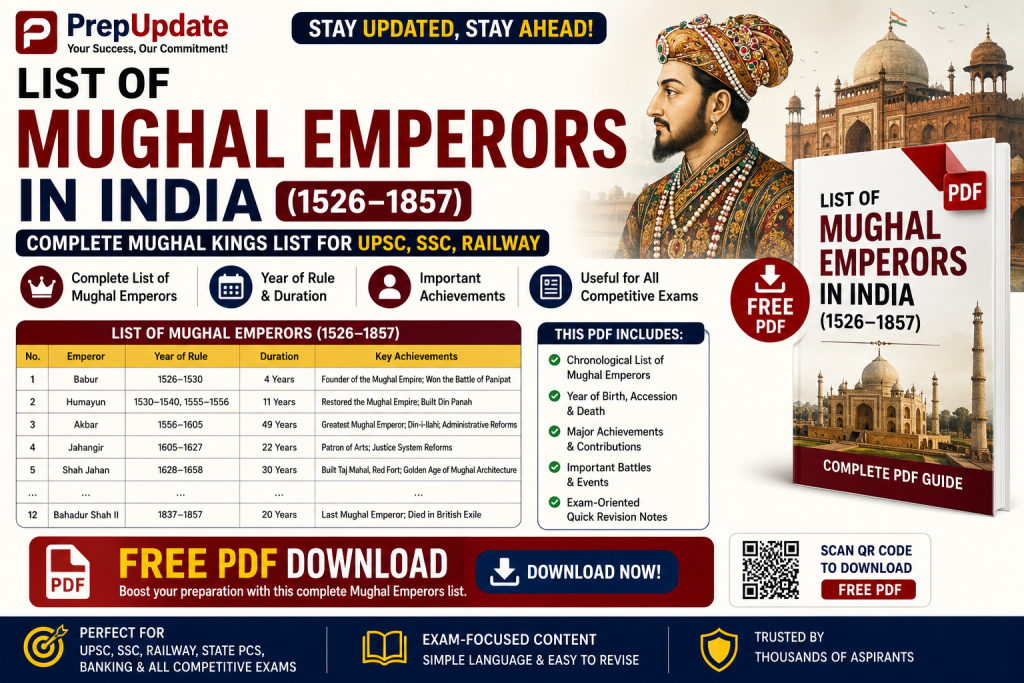
List of Mughal Emperors in India PDF (1526–1857)
The List of Mughal Emperors in India PDF is one of the most important topics in Indian History for competitive examinations. Questions related to Mughal rulers, their reigns, important battles, administration, architecture, and policies are frequently asked in UPSC, SSC, Banking, Railway, State PSC, Defence, Teaching, and other Government Exams.
In this article, you’ll get the complete List of Mughal Emperors in India PDF, important facts, chronology, sample MCQs, FAQs, and exam-oriented notes.
Table of Contents
- List of Mughal Emperors in India PDF
- Mughal Empire Timeline
- Complete List of Mughal Emperors (1526–1857)
- Important Facts about Mughal Rulers
- Download Mughal Emperors PDF
- Mughal Emperors MCQs
- FAQs
- Conclusion
List of Mughal Emperors in India PDF
Candidates preparing for competitive exams can download the List of Mughal Emperors in India PDF for quick revision.
The Mughal Empire ruled a major part of the Indian subcontinent from 1526 to 1857, beginning with Babur and ending with Bahadur Shah II.
This topic is highly important for:
- UPSC Civil Services
- SSC CGL, CHSL, MTS
- Railway (RRB)
- Banking Exams
- State PSC
- Defence Exams
- Teaching Exams
Mughal Empire Timeline (1526–1857)
| Emperor | Reign |
|---|---|
| Babur | 1526–1530 |
| Humayun | 1530–1540, 1555–1556 |
| Akbar | 1556–1605 |
| Jahangir | 1605–1627 |
| Shah Jahan | 1628–1658 |
| Aurangzeb | 1658–1707 |
| Bahadur Shah I | 1707–1712 |
| Jahandar Shah | 1712–1713 |
| Farrukhsiyar | 1713–1719 |
| Rafi-ud-Darajat | 1719 |
| Rafi-ud-Daulat | 1719 |
| Muhammad Ibrahim | 1720 |
| Muhammad Shah | 1719–1748 |
| Ahmad Shah Bahadur | 1748–1754 |
| Alamgir II | 1754–1759 |
| Shah Jahan III | 1759–1760 |
| Shah Alam II | 1760–1806 |
| Akbar Shah II | 1806–1837 |
| Bahadur Shah II | 1837–1857 |
Complete List of Mughal Emperors in India PDF
Babur (1526–1530)
- Founder of the Mughal Empire.
- Defeated Ibrahim Lodi in the First Battle of Panipat (1526).
- Won the Battle of Khanwa (1527) against Rana Sanga.
- Descendant of Timur and Genghis Khan.
Humayun (1530–1540 & 1555–1556)
- Son of Babur.
- Defeated by Sher Shah Suri.
- Regained the throne in 1555.
- Left a unified empire to Akbar.
Akbar (1556–1605)
- Became emperor at the age of 13.
- Defeated Hemu in the Second Battle of Panipat (1556).
- Abolished the Jizya Tax.
- Introduced Din-i-Ilahi (1582).
- Expanded the Mughal Empire significantly.
Jahangir (1605–1627)
- Son of Akbar.
- Established diplomatic relations with the British East India Company.
- Patron of art and painting.
Shah Jahan (1628–1658)
- Mughal architecture reached its peak.
- Built the Taj Mahal, Red Fort, Jama Masjid, and Shalimar Gardens.
- Imprisoned by his son Aurangzeb.
Aurangzeb (1658–1707)
- Longest reigning Mughal Emperor.
- Expanded the empire to its largest territorial extent.
- Compiled Fatawa-e-Alamgiri.
- Reimposed the Jizya Tax.
Later Mughal Emperors
Following Aurangzeb’s death, the Mughal Empire gradually declined.
The important later Mughal rulers include:
- Bahadur Shah I
- Jahandar Shah
- Farrukhsiyar
- Rafi-ud-Darajat
- Rafi-ud-Daulat
- Muhammad Ibrahim
- Muhammad Shah (Rangeela)
- Ahmad Shah Bahadur
- Alamgir II
- Shah Jahan III
- Shah Alam II
- Akbar Shah II
- Bahadur Shah II (Last Mughal Emperor)
Important Facts about the List of Mughal Emperors in India PDF
| Fact | Details |
|---|---|
| Founder | Babur |
| Last Mughal Emperor | Bahadur Shah II |
| Empire Duration | 1526–1857 |
| Greatest Expansion | Aurangzeb |
| Builder of Taj Mahal | Shah Jahan |
| Din-i-Ilahi | Akbar |
| First Battle of Panipat | 1526 |
| Second Battle of Panipat | 1556 |
| Battle of Buxar | 1764 (Shah Alam II) |
Download List of Mughal Emperors in India PDF
The List of Mughal Emperors in India PDF is extremely useful for last-minute revision.
The PDF includes:
- Complete Timeline
- Important Battles
- One-Liner Facts
- Previous Year Questions
- Revision Notes
- Practice MCQs
Mughal Emperors MCQs
Q1. Who founded the Mughal Empire in India?
A. Humayun
B. Akbar
C. Babur
D. Sher Shah
Answer: C. Babur
Q2. Who introduced Din-i-Ilahi?
A. Jahangir
B. Akbar
C. Aurangzeb
D. Shah Jahan
Answer: B. Akbar
Q3. Which Mughal emperor built the Taj Mahal?
A. Aurangzeb
B. Jahangir
C. Shah Jahan
D. Babur
Answer: C. Shah Jahan
Q4. Who was the last Mughal Emperor?
A. Akbar Shah II
B. Bahadur Shah II
C. Shah Alam II
D. Alamgir II
Answer: B. Bahadur Shah II
Q5. Which Mughal ruler expanded the empire the most?
A. Akbar
B. Shah Jahan
C. Aurangzeb
D. Humayun
Answer: C. Aurangzeb
Q6. In which year was the First Battle of Panipat fought?
A. 1526
B. 1556
C. 1761
D. 1707
Answer: A. 1526
Q7. Who abolished the Jizya Tax?
A. Babur
B. Akbar
C. Shah Jahan
D. Aurangzeb
Answer: B. Akbar
Q8. Which Mughal emperor was known as “Rangeela”?
A. Muhammad Shah
B. Jahangir
C. Bahadur Shah I
D. Akbar Shah II
Answer: A. Muhammad Shah
Q9. Which Mughal emperor had relations with the British East India Company?
A. Shah Jahan
B. Jahangir
C. Akbar
D. Humayun
Answer: B. Jahangir
Q10. The Mughal Empire officially ended in:
A. 1757
B. 1806
C. 1857
D. 1947
Answer: C. 1857
Frequently Asked Questions (FAQs) – List of Mughal Emperors in India PDF
Q1. Who was the founder of the Mughal Empire?
Babur founded the Mughal Empire after defeating Ibrahim Lodi in the First Battle of Panipat in 1526.
Q2. Who was the last Mughal Emperor?
Bahadur Shah II (Bahadur Shah Zafar) was the last Mughal Emperor and was exiled after the Revolt of 1857.
Q3. Which Mughal emperor built the Taj Mahal?
Shah Jahan built the Taj Mahal in memory of his wife Mumtaz Mahal.
Q4. Who introduced Din-i-Ilahi?
Akbar introduced Din-i-Ilahi in 1582.
Q5. Which Mughal emperor ruled for the longest period?
Aurangzeb ruled from 1658 to 1707, making him the longest-reigning Mughal Emperor.
Related Articles
- Mughal Administration Notes
- Akbar’s Religious Policy
- Battles of Panipat
- Delhi Sultanate Notes
- Medieval History MCQs
- Indian History PDF Notes
Conclusion – List of Mughal Emperors in India PDF
The List of Mughal Emperors in India PDF is an essential study resource for every competitive exam aspirant. From Babur to Bahadur Shah II, understanding the reign, important battles, architecture, administration, and major events of each Mughal ruler helps in scoring well in History and Static GK sections.
Download the List of Mughal Emperors in India PDF, revise the important one-liners, practice MCQs regularly, and strengthen your preparation for UPSC, SSC, Banking, Railway, State PSC, Defence, and other Government Exams.